Payment Innovations Driving Live Dealer Poker in Sweden's Regulated Mobile Gaming Landscape
Morgan Washington · Aug 21, 2026

Payment Innovations Driving Live Dealer Poker in Sweden's Regulated Mobile Gaming Landscape
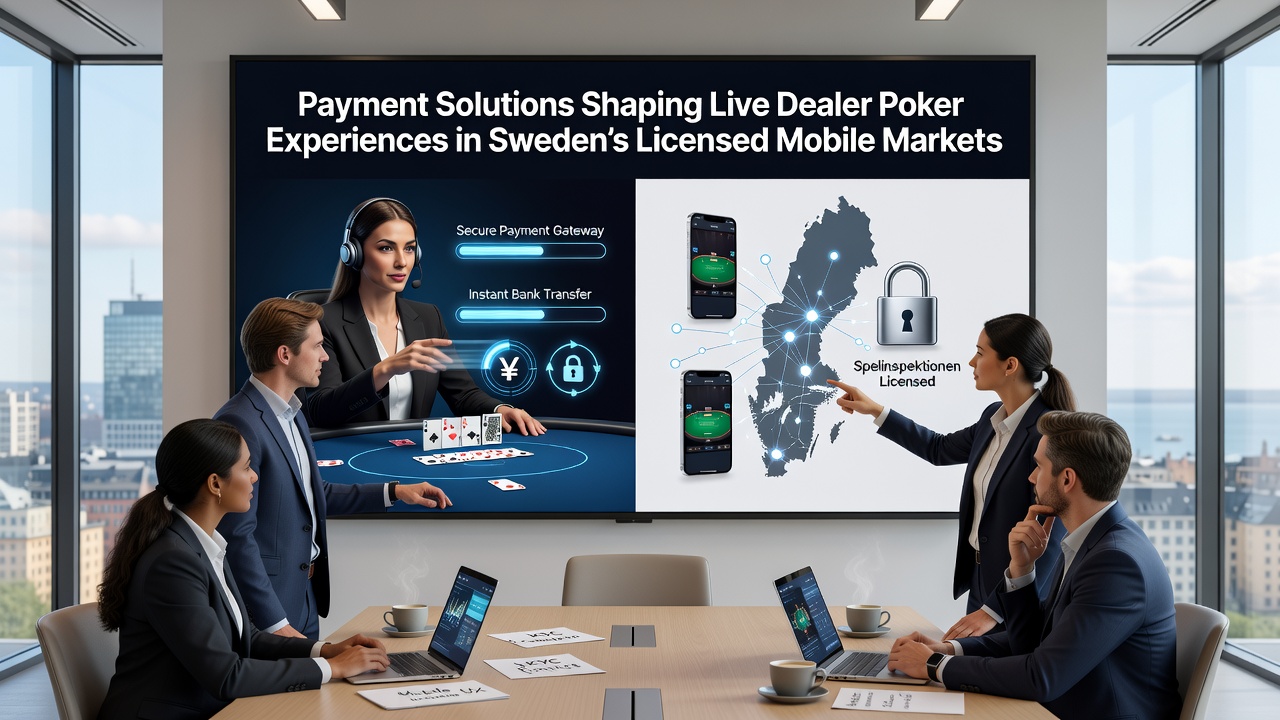
Sweden's gambling market has operated under a licensing system administered by Spelinspektionen since the 2019 re-regulation, and mobile platforms now account for the majority of live dealer poker activity; payment solutions integrate directly with these platforms to handle deposits, withdrawals, and compliance checks in real time. Licensed operators must use methods that support instant verification while meeting strict anti-money laundering requirements, which creates a framework where transaction speed and security shape how players join tables and manage funds during sessions.
Core Payment Methods in Licensed Swedish Mobile Markets
Swish stands out as the dominant instant transfer tool because it connects directly to Swedish bank accounts and processes payments within seconds, allowing players to fund poker accounts without leaving the mobile app; Trustly and similar open banking services add another layer by enabling direct bank-to-operator transfers that bypass traditional card networks. Data from industry reports shows these methods handle a growing share of transactions in the live dealer segment, where sessions often require quick top-ups between hands or tournaments. Card payments remain available yet see lower usage in mobile poker environments since they trigger additional verification steps that can interrupt the flow of live games.
How These Solutions Influence Live Dealer Poker Sessions
Instant deposits through Swish or Trustly mean players can respond immediately to table invitations or re-buy opportunities without waiting for processing delays, while the same systems support withdrawals that typically complete within hours once verification clears; this combination reduces friction during extended mobile sessions that might span several hours of continuous play. Security protocols built into these payment rails include automatic checks against national self-exclusion registers, so funds cannot move if a player has opted out, and operators receive real-time flags that keep sessions compliant. Observers note that seamless payment integration also supports responsible gambling tools, such as deposit limits that apply across multiple live poker tables without requiring manual resets.
Live dealer poker on mobile devices relies on stable connections and low-latency interfaces, and payment gateways now embed directly into the game client so balance updates appear alongside card actions and chip counts; this technical alignment keeps the experience fluid even when players switch between cash games and tournaments. Research from European gaming associations indicates that markets with strong instant-payment adoption see higher session completion rates because players stay engaged rather than pausing to resolve funding issues.
Regulatory Context and Upcoming Developments
Spelinspektionen continues to refine requirements around payment traceability and speed, with updates expected to take effect by August 2026 that will further standardize open-banking integrations across all licensed mobile operators; these changes align with broader EU efforts to update payment service rules and will likely expand the range of accepted instant methods while tightening reporting on cross-border transactions. Operators already prepare systems to accommodate these standards, ensuring that live dealer poker platforms remain uninterrupted when new verification layers activate. Academic studies on mobile gambling behavior in regulated European markets highlight that transparent payment flows correlate with sustained player trust, which in turn supports longer-term market stability.
Technical Integration and User Experience Factors
Mobile apps for licensed Swedish operators embed QR-code scanning and biometric confirmation into payment flows, letting users authorize transfers without typing account details during active poker rounds; this reduces errors and keeps attention on the dealer feed rather than on separate banking screens. Data shows that platforms offering multiple instant methods alongside one another experience fewer abandoned sessions, because players can choose the option that matches their bank or device preferences. Those who have examined transaction logs across the market find that average deposit sizes in live dealer poker tend to remain modest and frequent, a pattern enabled by the low-friction nature of Swish and Trustly.
Conclusion
Payment solutions continue to define the operational backbone of live dealer poker in Sweden's licensed mobile markets by combining speed, compliance, and security into single integrated flows. As regulatory adjustments approach in 2026, operators and technology providers refine these systems to maintain seamless access while meeting evolving standards, ensuring the mobile experience stays consistent for players across cash games and tournaments.