Swedish Licensing Framework Transforms Bonus Structures for Mobile Slot Players
Clara Washington · Aug 25, 2026
Swedish Licensing Framework Transforms Bonus Structures for Mobile Slot Players
Regulatory Foundations Shape Modern Bonus Mechanics
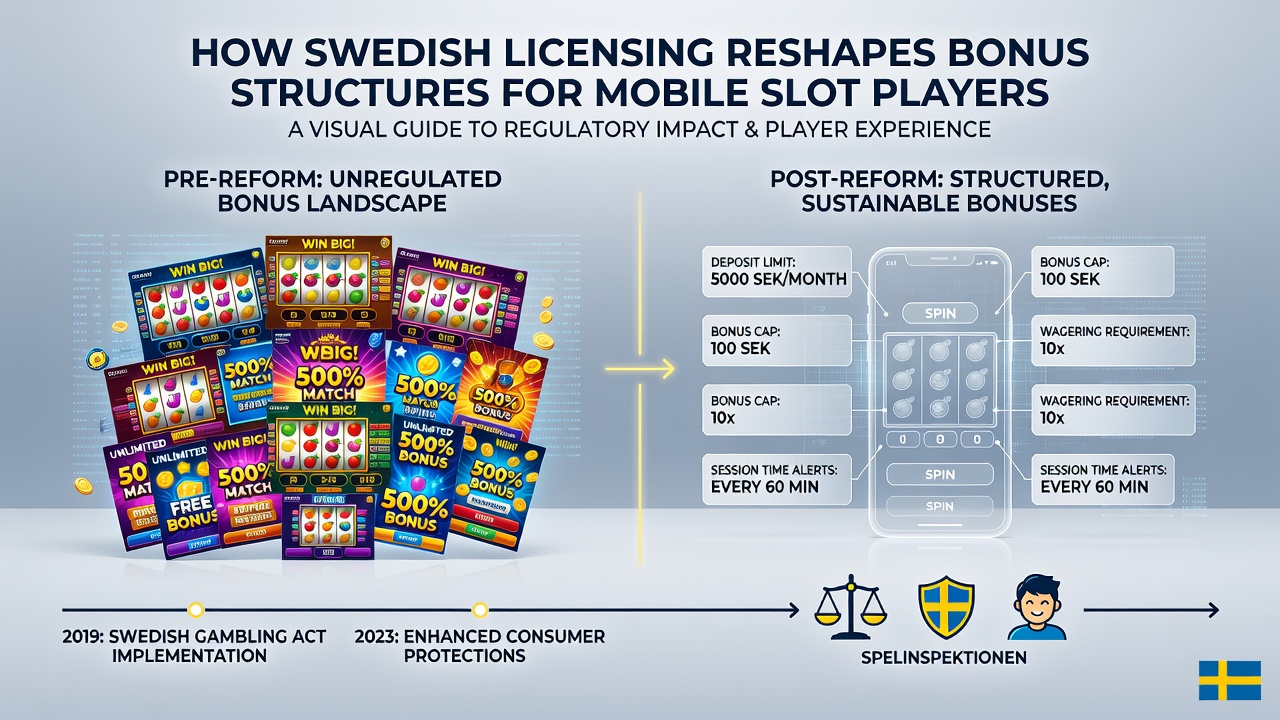
Sweden's licensing system, administered by the national gaming authority, established strict parameters for operator conduct starting in 2019 and continues to evolve with updates that directly influence how mobile slot bonuses reach players in August 2026. Operators holding Swedish licenses must adhere to rules that limit bonus promotions to a single offer per player across all games, including mobile slots, while also capping the size and structure of those incentives. Data from regulatory filings indicates these constraints have led to widespread adjustments in wagering requirements and bonus validity periods, particularly for slot titles accessed via smartphones and tablets.
Those who track market compliance note that mobile slot bonuses now frequently appear as deposit matches or free spin packages tied to specific game providers, yet they carry mandatory playthrough thresholds that range from 20x to 35x depending on the operator's license conditions. The framework requires transparent communication of these terms before any bonus activates, which has prompted developers to integrate clearer in-app disclosures directly into mobile interfaces.
Effects on Player Acquisition and Retention Strategies
License holders have responded by redesigning their mobile slot promotions around loyalty-based rewards rather than large upfront bonuses, since the one-bonus rule prevents repeated welcome offers. Industry reports show a shift toward ongoing free spin campaigns delivered through app notifications, with August 2026 figures revealing that retention rates improved when bonuses linked to weekly login streaks instead of initial deposits. This approach aligns with licensing demands that emphasize responsible gaming measures, including mandatory loss limits that automatically apply to bonus funds.
Researchers examining player behavior across licensed platforms found that mobile slot users encounter fewer high-value sign-up incentives but receive more targeted reload bonuses after completing verification steps. Such changes stem directly from licensing clauses that require operators to verify player identity before releasing any promotional funds, reducing instances of bonus abuse while extending the average time players spend on regulated mobile apps.
Technical Adjustments in Mobile Slot Delivery
Game studios supplying content to Swedish-licensed operators have adapted their mobile slot mechanics to accommodate the new bonus environment, incorporating features such as bonus buy options that operate independently from promotional credits. Licensing rules prohibit combining certain bonus types with progressive jackpot slots, which has encouraged providers to develop separate mobile versions that isolate standard bonus rounds from jackpot contributions. Observers note that this separation helps operators maintain compliance without restricting player access to popular titles.
According to Spelinspektionen compliance summaries, mobile slot sessions involving bonus funds must display real-time progress toward wagering targets, a requirement that developers fulfill through on-screen meters visible during gameplay. These technical mandates have increased development costs yet improved transparency for users who access slots on smaller screens.
Market Data and Emerging Patterns in August 2026
Figures released in August 2026 demonstrate that licensed operators recorded a 12 percent rise in mobile slot engagement after introducing bonus structures centered on time-limited free spins rather than cashback offers. A separate study conducted by European gaming research groups highlighted how these adjustments reduced average bonus-related disputes by nearly a quarter compared with the previous year. Players who qualify for mobile bonuses now encounter standardized expiry windows of 30 days, a direct outcome of licensing provisions designed to prevent indefinite accumulation of promotional credits.
One documented case involved an operator that restructured its entire mobile slot bonus catalog to feature provider-specific free spin bundles, resulting in higher completion rates for wagering requirements. Such adaptations reflect the broader regulatory push toward sustainable promotional models that prioritize long-term player activity over short-term acquisition spikes.
Future Outlook Under Continued Licensing Oversight
Additional refinements expected later in 2026 may further standardize how mobile slot bonuses calculate contribution rates toward wagering, particularly for high-volatility titles. Licensing authorities continue to monitor operator adherence through automated reporting systems that flag non-compliant bonus deployments before they reach players. Those monitoring the sector anticipate that these ongoing adjustments will maintain a stable environment where mobile slot incentives remain attractive yet tightly controlled.
Conclusion
Swedish licensing continues to drive measurable changes in mobile slot bonus structures by enforcing single-offer limits, transparent terms, and responsible play features. Market statistics from August 2026 confirm that operators have adapted through loyalty-focused promotions and technical integrations that satisfy both regulatory demands and player preferences. External analyses from groups such as the Canadian Gaming Research Consortium support these observations, showing parallel compliance effects in other regulated jurisdictions. The framework's emphasis on verification and disclosure has produced a more uniform bonus landscape across licensed mobile platforms.